Skydiver's Parachute Snags on Plane's Tail During Formation Jump Over Australia
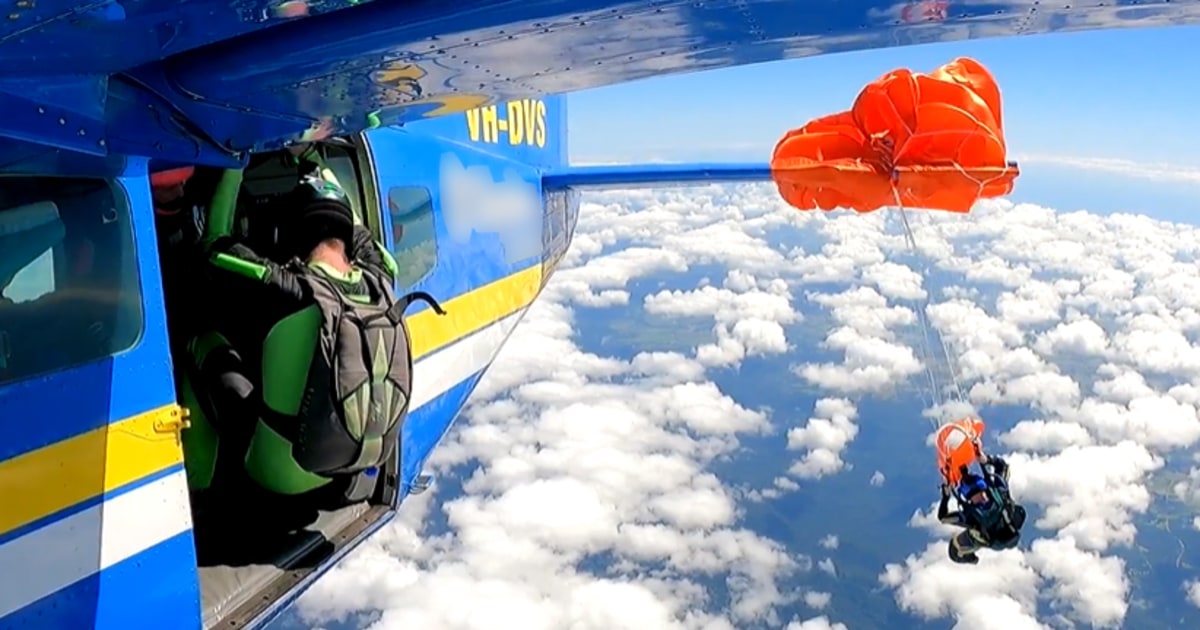
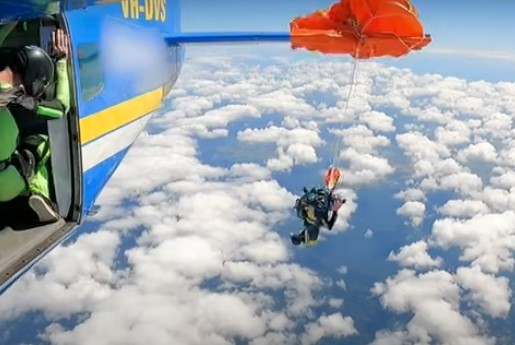
A skydiver's parachute entangled on a Cessna's tail at 15,000 feet over Mission Beach, Australia, during a formation jump on September 20.



Overview
On September 20, a dramatic incident occurred during a 16-way formation jump involving 17 parachutists from the Far North Freefall Skydiving club.
The event took place at an altitude of 15,000 feet over Mission Beach, Australia, as skydivers exited a small Cessna aircraft.
One skydiver's parachute became critically entangled on the tail of the airplane, leaving the individual dangling precariously.
This entanglement happened while the skydiver was attempting a complex formation jump, highlighting the inherent risks of the sport.
Despite the perilous situation for the dangling skydiver, the pilot and the remaining 16 parachutists on board the aircraft were reported to be unharmed.
Analysis
Center-leaning sources cover this story neutrally, focusing on factual reporting of a dramatic skydiving incident. They present the sequence of events clearly, attribute information to official sources like the Australian Transport Safety Bureau, and avoid loaded language or emotional appeals, ensuring an objective account of the mishap and its resolution.
FAQ
During a large formation exit, jumpers leave the aircraft in close sequence and open high; if a canopy deploys too close to the aircraft or a jumper drifts back toward the plane during deployment, lines or the inflated canopy can contact the tail and snag, especially in small aircraft used for high-altitude exits and complex formations—pre‑jump briefings and exit/ opening separation are intended to prevent this.
Standard procedures emphasize avoiding canopy deployment near the aircraft, maintaining separation, and for pilots to fly a steady course to minimize oscillation; jumpers are trained in pre‑planned emergency actions (avoid attempts to reboard, cutaway only if trained and safe, and follow pilot instructions), while pilots follow aircraft emergency protocols and may land as soon as safely possible; these responses are covered in USPA manuals and drop‑zone briefings.[2]
Reports of this incident said the dangling skydiver was in a perilous position while the pilot and other 16 parachutists on board were unharmed; parachute-aircraft entanglements are rare but recognized hazards in formation and high-altitude jumps, which is why procedures and staged openings exist to reduce the risk.
Drop zones require a load organizer to conduct a pre‑jump briefing covering exit order, separation, communications, emergency procedures, and aircraft movement; individual gear inspections are performed multiple times and coaches review docking, breakoff altitudes and emergency procedures before load‑up, per USPA and common drop‑zone protocols.
Yes; measures include increasing exit and deployment separation, higher planned opening altitudes, stricter positioning and docking protocols, thorough dirt‑dives and briefings, and having experienced formation pilots maintain steady flight paths—these risk‑mitigation practices are recommended by formation manuals and training guides.


