Utah Judge Strikes Down GOP Congressional Map, Adopts Alternative Boosting Democrats
Utah Judge Dianna Gibson struck down the GOP-drawn congressional map, adopting an alternative creating a Democratic-leaning district. This ruling boosts Democrats' 2026 midterm chances in the deep-red state.

 Salon
SalonGerrymandering fails in Utah: Even red states have rules

 FOX News
Red state judge chooses new congressional map in fight that could reshape House control

 PBS NewsHour
Utah judge rejects Republican-drawn congressional map, adopts alternative creating Democratic-leaning district
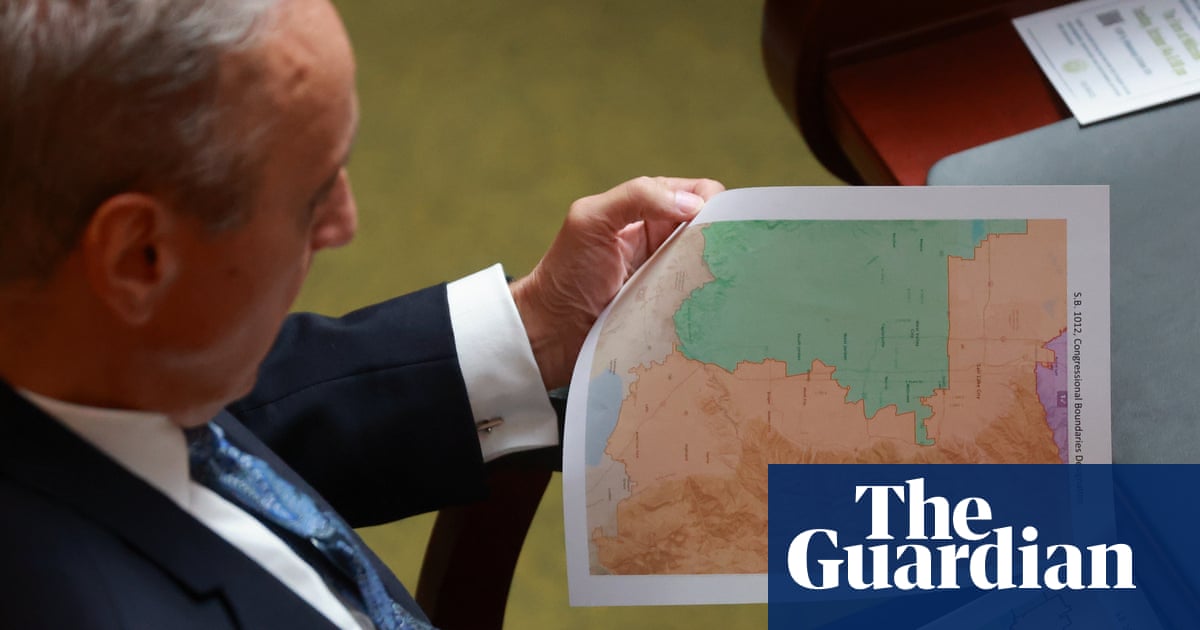
 The Guardian
Utah judge approves map creating new House seat in Democratic-leaning area
Overview
Judge Dianna Gibson rejected Utah's GOP-drawn congressional map, adopted after the 2020 census, citing it unduly favored Republicans and circumvented anti-gerrymandering standards.
The judge ordered lawmakers to draw new maps, adopting an alternative proposed by plaintiffs, including the League of Women Voters of Utah, to ensure fair representation.
This ruling creates a new Democratic-leaning district in Utah, a deep-red state without a Democrat in Congress since early 2021, significantly boosting the party's chances.
The decision significantly impacts the 2026 midterm elections, potentially giving Democrats a stronger opportunity to flip a U.S. House seat and counter GOP-favored redistricting efforts.
Republicans are challenging the judge's legal authority to enact a map not approved by the Legislature, disrupting GOP plans for a clean sweep in deep-red states.
Analysis
Center-leaning sources frame this story by emphasizing the political implications of the judge's ruling as a significant setback for Republicans and a boost for Democrats. They highlight the judge's finding of gerrymandering and the GOP Legislature's past efforts to circumvent anti-gerrymandering rules, positioning the decision as a corrective action against partisan manipulation.
FAQ
Judge Dianna Gibson ruled that the GOP-drawn map failed to comply with Proposition 4, a 2018 voter-approved law that prohibits partisan gerrymandering and requires neutral map-drawing criteria. She found that the map was drawn with partisan political data on display and was purposely designed to favor Republicans, constituting substantial pro-Republican bias and an extreme partisan outlier.
Judge Gibson adopted an alternative map known as Map 1, which was proposed by plaintiffs including the League of Women Voters of Utah, Mormon Women for Ethical Government, and Better Boundaries. This map creates a Democratic-leaning district by consolidating Salt Lake County largely within a single district, splitting Utah County into two districts, and ensuring fair representation more in line with Proposition 4.
The ruling creates a Democratic-leaning congressional district in Utah, a state traditionally dominated by Republicans, thus significantly boosting Democrats' chances of winning a U.S. House seat in the 2026 midterm elections. This could potentially end the GOP's clean sweep in Utah's congressional delegation and increase Democratic representation.
Republicans in the Utah Legislature have strongly opposed Judge Gibson's decision. One legislator, Rep. Matt MacPherson, publicly suggested impeaching the judge, accusing her of a 'gross abuse of power.' The Republicans are also challenging the judge's legal authority to enact a map not approved by the Legislature and have protested while pursuing appeals.
Proposition 4 is a 2018 Utah voter-approved ballot measure that established an independent redistricting process and set neutral, traditional criteria for drawing congressional maps. It prohibits the use of partisan political data in map drawing to prevent gerrymandering. Judge Gibson ruled that the Legislature's map violated Proposition 4, which was central to the case and the rejection of the GOP map.