Iraqi Parliamentary Election Held Amidst Tight Security and Major Political Boycott
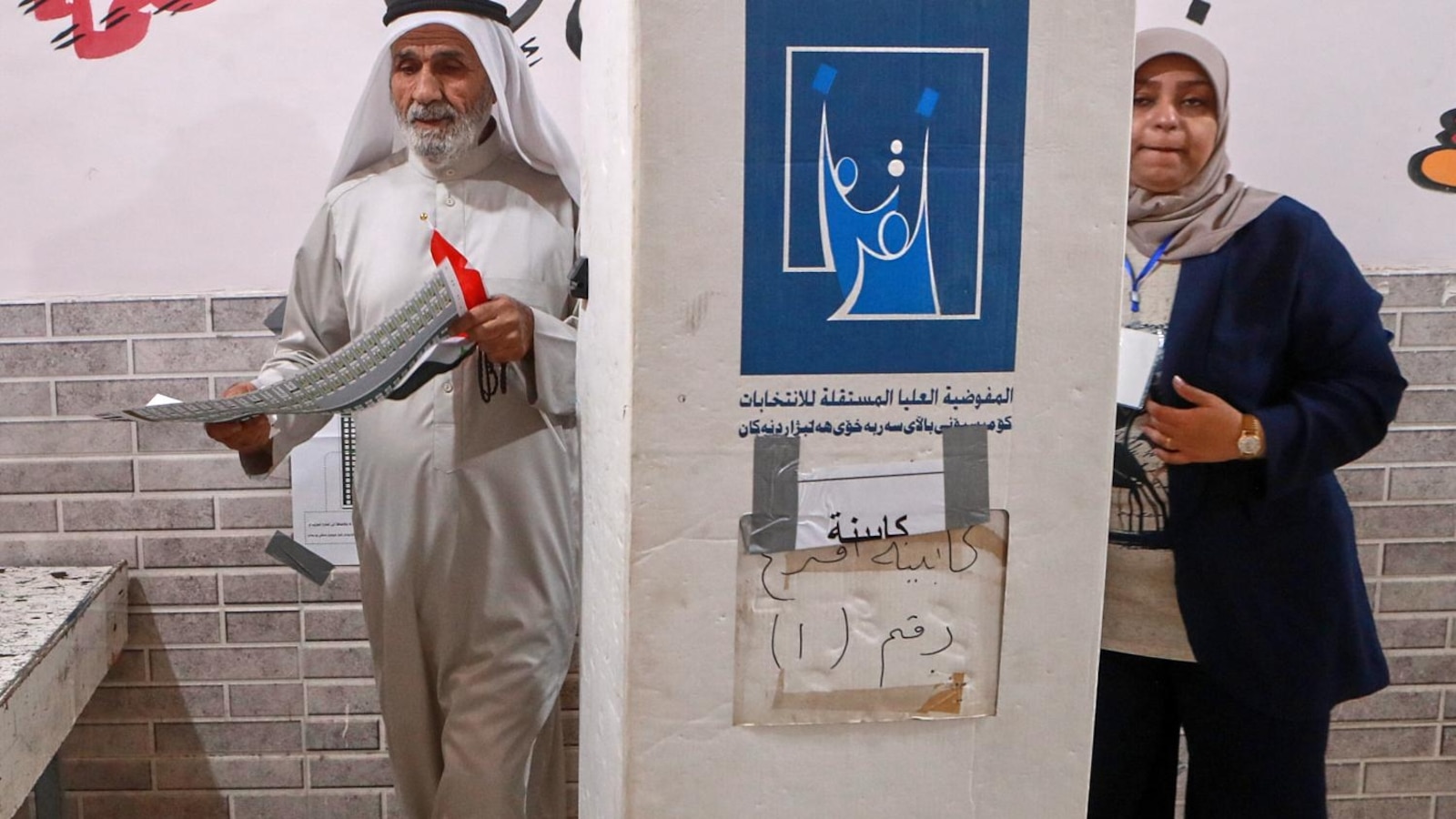
Iraqis voted in a parliamentary election across 8,703 polling stations, marked by tight security and a significant boycott from the Sadrist Movement, resulting in low voter turnout.


Overview
Iraqis participated in a parliamentary election with 8,703 polling stations open across the country, despite a major political bloc boycott.
The election was characterized by tight security measures, particularly observed at the entrance to Sadr City, contrasting with other capital areas.
The Sadrist Movement, led by Muqtada al-Sadr, officially boycotted the parliamentary election, impacting voter participation.
Only 21.4 million out of 32 million eligible voters updated their information and obtained voter cards prior to the election.
Many polling stations were reported to be almost empty, reflecting the low voter turnout influenced by the boycott and security concerns.
Analysis
Center-leaning sources cover this story neutrally, focusing on observable facts and providing context without overt editorial bias. They emphasize the low voter turnout and the significant impact of the Sadrist Movement's boycott, supporting these points with direct observations and data. The reporting avoids loaded language, presenting a balanced overview of the election's key characteristics.
FAQ
The Sadrist Movement, led by Muqtada al-Sadr, boycotted the election due to dissatisfaction with the political process and concerns over electoral integrity, hoping to pressure reforms and challenge the legitimacy of the government.
The boycott significantly contributed to low voter turnout, with only 21.4 million out of 32 million eligible voters updating their information and obtaining voter cards, and many polling stations reported being almost empty.
Tight security measures were enforced, especially at sensitive locations like Sadr City, to ensure the safety of voters and polling staff amid concerns about potential unrest.
A total of 8,703 polling stations were open across Iraq for the parliamentary election.
The voter turnout was low, with only about 67% of eligible voters (21.4 million out of 32 million) updating their information and obtaining voter cards, though the actual percentage of those who cast ballots was even lower.


