US Unemployment Hits Four-Year High at 4.6%; Federal Reserve Cuts Rates Amid Cooling Labor Market
US unemployment hit a four-year high of 4.6% in November, with 64,000 jobs added after October losses, prompting the Federal Reserve to cut interest rates.

 TIME Magazine
Unemployment Rises to Four-Year High in the U.S.
 TPM
TPMLatest Jobs Report Suggests Tariffs Harming Blue Collar Work, Counter to White House Narrative

 Al Jazeera
US unemployment hits highest level since 2021 as labour market cools

 PBS NewsHour
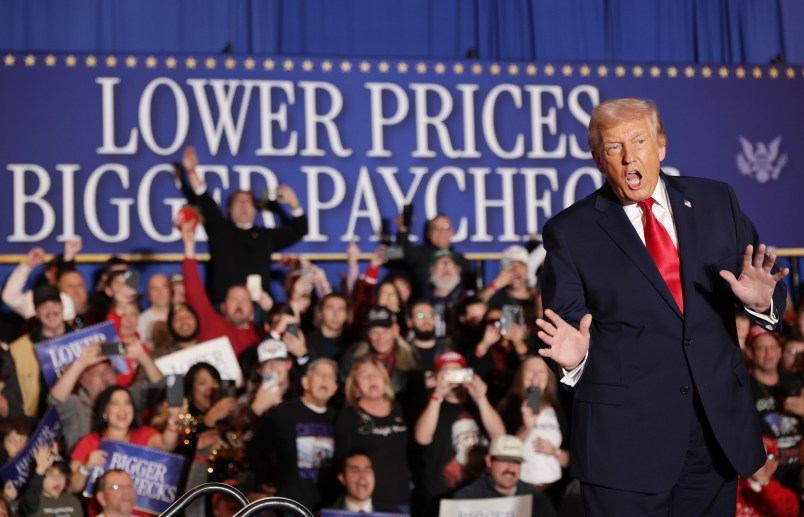
WATCH LIVE: Vance delivers remarks in Allentown, Pa., touting Trump's economic agenda
Overview
The US unemployment rate rose to 4.6% in November, a four-year high since 2021, despite 64,000 jobs added, following a 105,000 loss in October.
The Federal Reserve cut its benchmark interest rate by 25 basis points to 3.5-3.75 percent, the third cut this year, due to cooling labor conditions.
Healthcare added over 46,000 jobs in November, significantly boosting private sector growth, while manufacturing jobs continued to decline both monthly and annually.
Hiring momentum is hindered by uncertainty over Trump's tariffs and high interest rates, causing job cuts in sectors sensitive to these economic pressures.
Average hourly earnings for workers are rising at the smallest rate in years, with a 0.1% increase in October and 3.5% annual growth in November.
Analysis
Center-leaning sources collectively frame this story by emphasizing the negative trends and underlying weakness in the labor market. They highlight the rise in unemployment to a four-year high, October job losses, and downward revisions, portraying a "cooling" or "shaky" economy. Positive job gains are often contextualized to underscore persistent challenges and a difficult environment for job seekers.
FAQ
The unemployment rate can rise even when payrolls add jobs because the rate is based on the household survey of people looking for work; in November the number of unemployed people increased and labor force participation shifted, so unemployment edged up to 4.6% while payrolls showed a net gain of 64,000 jobs in the establishment survey.[2] [1]
Healthcare was the largest contributor, adding over 46,000 jobs in November, while manufacturing continued to decline both month-to-month and year-over-year; transportation and warehousing and federal government employment also showed decreases in November.[2] [1]
The Fed cut its benchmark rate by 25 basis points citing cooling labor-market conditions—slower hiring, rising unemployment, and easing wage growth—which reduced inflationary pressure and supported a rate cut decision.[1] [2]
Average hourly earnings growth has slowed markedly—showing a 0.1% monthly increase in October and 3.5% year-over-year in November—indicating weaker wage pressures that likely ease inflation concerns but can strain real incomes if inflation remains elevated.[2]
Uncertainty over proposed tariffs and prevailing high interest rates has dented hiring in sensitive sectors, prompting firms in affected industries to cut jobs or delay hiring—factors cited as constraining overall hiring momentum in recent months.[1]