Naked Protests Escalate in Portland Amidst Legal Battle Over Federal Troop Deployment
Naked protesters in Portland demonstrate against federal troops and Trump's policies. A federal judge temporarily halted troop deployment, with an appeals court ruling pending on President Trump's authority.
 New York Sun
‘Bare’-ing Their Grievances, Protestors at Portland Show Up to ICE Facility Fully Nude

 The Guardian
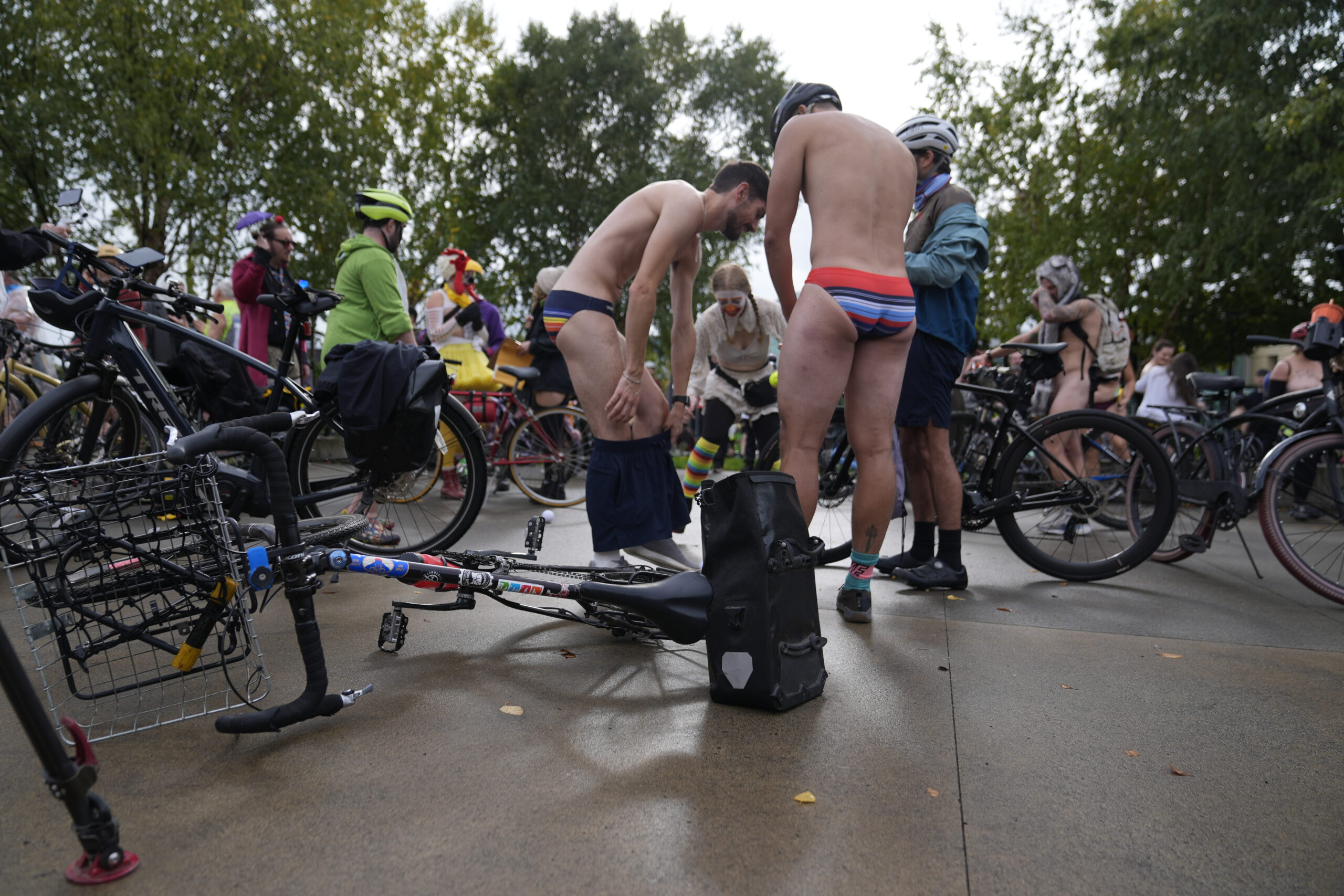
‘Quintessentially Portland’: nude cyclists protest against national guard deployment

 NBC News
In Portland, nude cyclists join anti-ICE protests in rain-soaked ride

 The Daily Wire
Portland Protesters Stage Nude ‘Die-In’ To Stop Trump’s Deportations
Overview
Protesters in Portland are actively demonstrating against federal troops, Immigration and Customs Enforcement (ICE) agents, and President Trump's deportation policies.
The demonstrations feature unique nude actions, including 'die-ins' and organized naked bike rides, to draw attention to their opposition.
A naked bike ride was specifically organized by protesters in response to President Trump's mobilization of National Guard troops in Portland.
A federal judge temporarily halted President Trump's deployment of federalized National Guard troops, impacting the ongoing situation in the city.
Portland is currently awaiting an appeals court ruling to determine President Trump's authority to deploy these federalized National Guard troops.
Analysis
Center-leaning sources frame the Portland protests by presenting them as a peaceful, community-driven "counternarrative" to President Trump's portrayal of the city. They emphasize local residents' vulnerability and humanity through the naked bike ride, highlighting their opposition to federal intervention and their love for Portland, thereby contrasting with a narrative of "far-left radicals."
FAQ
Protesters in Portland are using nude actions, such as 'die-ins' and organized naked bike rides, as a form of expressive protest to draw greater public and media attention to their opposition against federal troop deployments, ICE agents, and Trump's deportation policies. The use of nudity is intended to symbolize vulnerability and to make a powerful visual statement against government actions they view as overreach.
A federal appeals court is poised to rule on whether President Trump has the authority to deploy federalized National Guard troops in Portland, potentially reversing or upholding an earlier temporary injunction against their deployment. The ruling could set a precedent for federal intervention in local protests and impact the balance of power between state and federal authorities.
The news article does not directly address municipal or state responses. However, the judicial block by a federal judge against troop deployment suggests significant opposition, likely aligning with ongoing public protests and broader governmental resistance to federal intervention.
The ongoing protests in Portland highlight tensions between local communities and federal immigration enforcement, particularly regarding ICE and deportation policies. If the courts uphold the federal government's authority to deploy troops, it could embolden similar interventions elsewhere; if they block it, it may reinforce local governance and civil liberties in the face of federal action.
The available information does not report specific incidents of violence or public safety disruptions tied to nude protests in Portland. However, the presence of both protesters and federal actors has increased local tensions and drawn heightened attention from authorities.