Supreme Court upholds transgender athlete bans
Supreme Court upholds state bans on transgender girls and women in school sports.







Summary
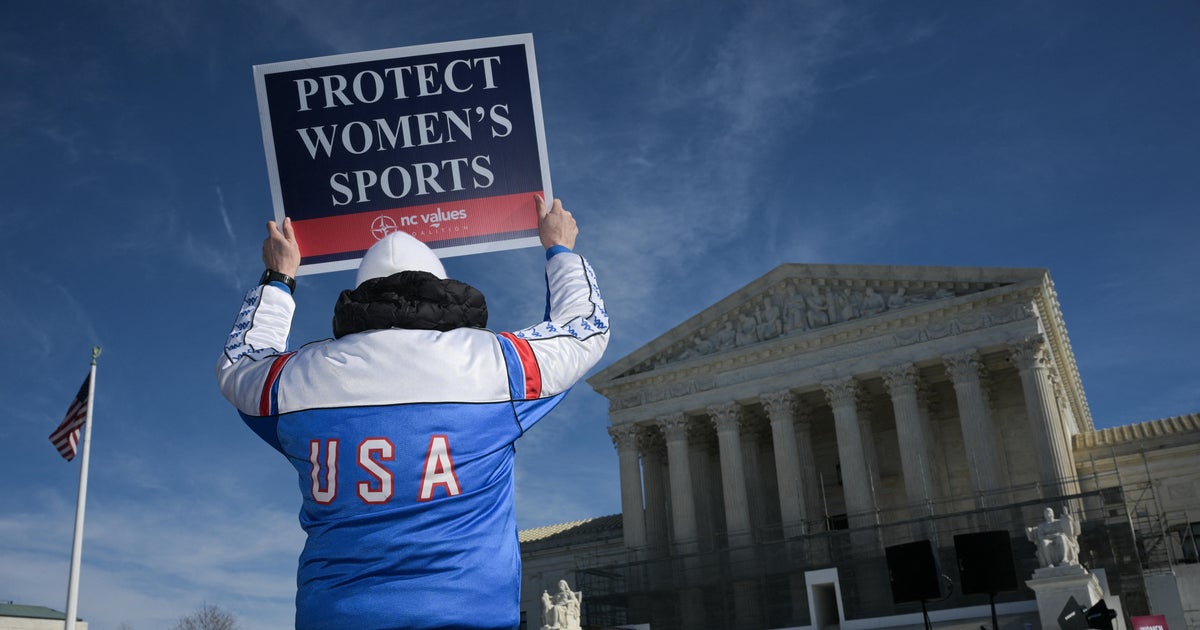
The Supreme Court ruled 6-3 Tuesday that states may bar transgender girls and women from competing on girls’ and women’s sports teams at publicly funded schools. The decision upheld West Virginia and Idaho laws requiring athletes to compete on teams corresponding with sex assigned at birth, rejecting challenges under Title IX and the Constitution’s Equal Protection Clause. Justice Brett Kavanaugh wrote the majority opinion; Justices Sonia Sotomayor, Elena Kagan and Ketanji Brown Jackson dissented. The ruling does not impose a national ban, but preserves similar restrictions in roughly half the states.
The Coverage
Trans Rights Rollback
Centers on the decision’s harm to transgender students and broader equality protections. It argues that the Court legitimized exclusion, scapegoating, or transphobia and made it harder for trans youth to participate fully in school life.




State Ban Authority
Centers on the legal consequence that states may enforce laws barring transgender athletes from girls’ and women’s school sports teams. It treats the key takeaway as the Supreme Court resolving, or at least permitting, state-level restrictions rather than mandating nationwide inclusion.


Conservative Court Politics
Centers on the ruling as part of a broader ideological shift by the Supreme Court, tied to Trump-era priorities and conservative judicial power. It argues that the decision reflects the influence of justices such as Kavanaugh, Thomas, Jackson, or Sotomayor and signals consequences beyond sports.


Women's Sports Protected
Centers on the ruling as a victory for girls’ and women’s athletics against transgender inclusion in female sports. It argues that the Court recognized biological differences, fairness, and safety, allowing states to keep what it calls males or boys out of girls’ competitions.


Get tomorrow's edition
Every side of today's biggest stories, free in your inbox each morning.