Scientists Awarded Nobel Prize for Revolutionary Porous Materials with Diverse Environmental Applications
Three scientists won the Nobel Prize in Chemistry for Metal-Organic Frameworks (MOFs), revolutionary porous materials offering diverse applications in environmental purification, gas storage, and energy.
 The Guardian
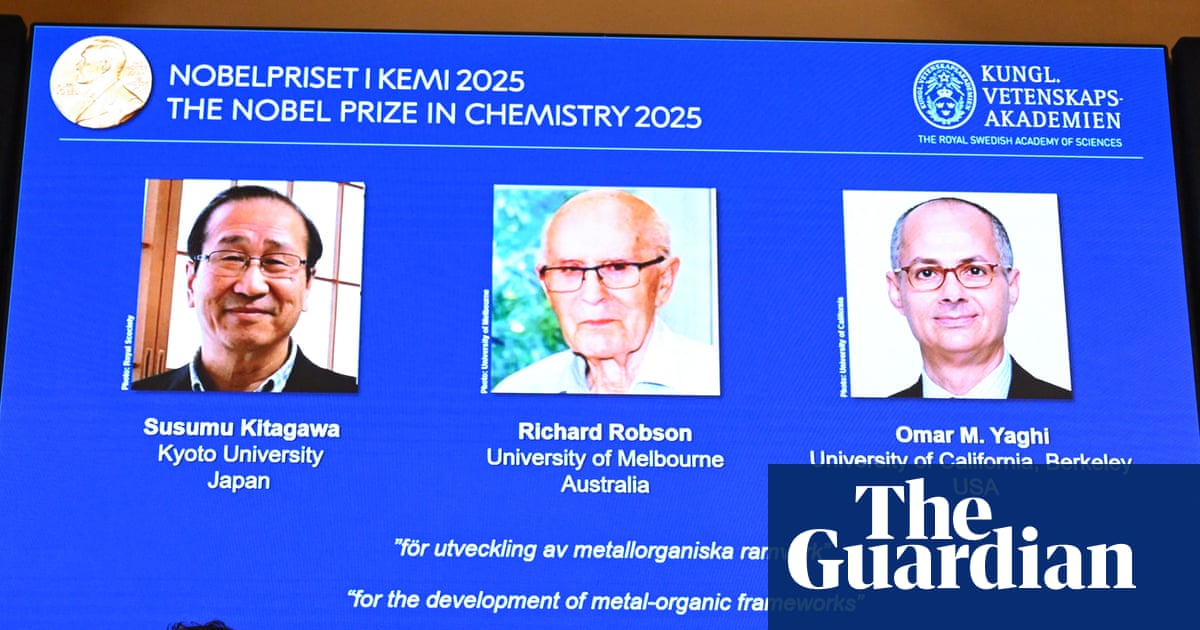
Nobel prize in chemistry awarded to scientists for work on porous materials

 New York Daily News
Molecular discovery that won Nobel Prize in chemistry is likened to ‘Harry Potter’ enchanted handbag
 ABC News
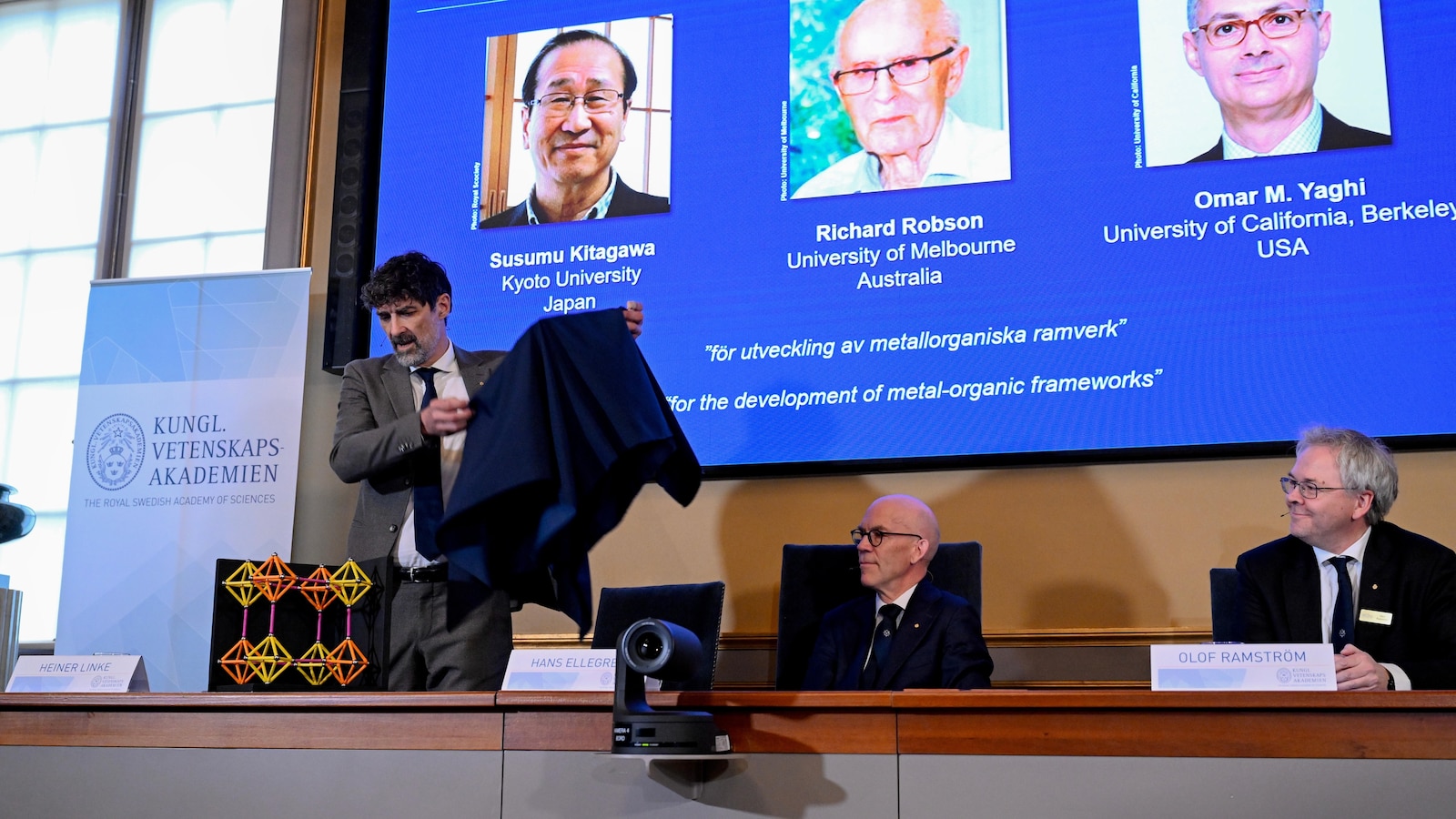
Molecular discovery wins Nobel Prize in chemistry
 IFL Science
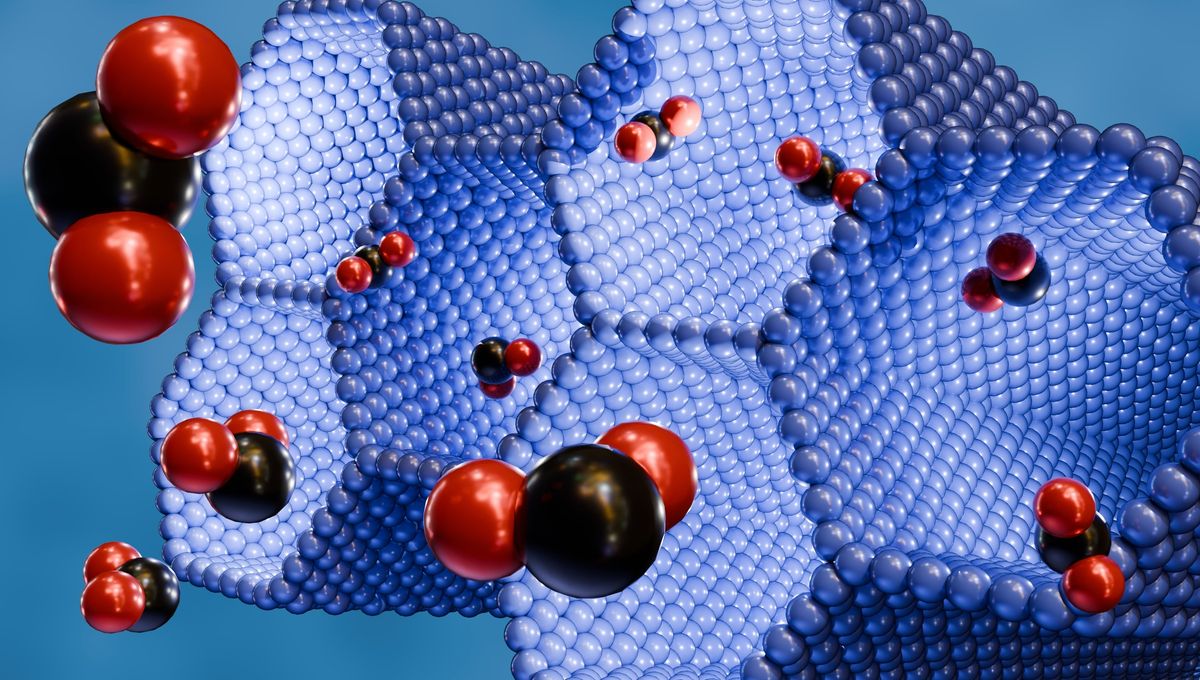
Nobel Prize In Chemistry Awarded For New Material Breakthrough
Overview
Susumu Kitagawa, Richard Robson, and Omar M. Yaghi were awarded the Nobel Prize in Chemistry for their groundbreaking work on Metal-Organic Frameworks (MOFs), revolutionary porous materials.
MOFs are described as 'hotel rooms for molecules' or an 'enchanted handbag,' capable of absorbing and containing gases due to their unique molecular architecture and flexibility.
These materials demonstrate significant potential for environmental solutions, including capturing water from air, removing carbon dioxide, and breaking down oil contamination.
A key highlight is their ability to separate 'forever chemicals' like PFAS from water, offering a crucial advancement in water purification and environmental cleanup.
The Royal Swedish Academy of Sciences recognized their contributions, with the three professors sharing the 11 million Swedish kronor (approximately $1.2 million USD) prize money.
Analysis
Center-leaning sources cover the Nobel Prize in Chemistry neutrally, focusing on the factual announcement, the scientific discovery, and its potential applications. They consistently attribute positive assessments of the research's impact to the Nobel Committee or experts, avoiding editorializing. The reporting is straightforward, providing details about the laureates and the prize's context without injecting bias.
FAQ
Metal-Organic Frameworks (MOFs) are porous materials with a unique molecular architecture that allows them to absorb and contain gases effectively, earning descriptions like 'hotel rooms for molecules' or an 'enchanted handbag.' Their flexibility and high surface area enable applications in environmental purification, gas storage, and energy solutions, making them revolutionary materials in chemistry.
MOFs have significant environmental applications including capturing water from the air, removing harmful gases like carbon dioxide, breaking down oil contamination, and importantly, separating persistent pollutants such as PFAS ('forever chemicals') from water, which is critical for water purification and environmental cleanup.
The 2025 Nobel Prize in Chemistry was awarded jointly to Susumu Kitagawa from Kyoto University, Japan; Richard Robson from the University of Melbourne, Australia; and Omar M. Yaghi from the University of California, Berkeley, USA, for their seminal work on Metal-Organic Frameworks.
Practical implementation of MOFs faces challenges such as their fragility, difficulty in recovery due to insolubility, potential environmental toxicity, and processing limitations. Advances like MOF-based three-dimensional macrostructures help address these by improving structural flexibility, mass transfer, and practicality for pollutant adsorption and catalysis.
MOFs are used for microplastic removal from aquatic environments via adsorption, degradation, and membrane separation. Their large surface area, tunable pores, chemical stability, and reusability allow them to remove microplastics effectively, achieving removal efficiencies from 70% to 99.9%, thus offering advanced solutions to microplastic contamination.

