Severe Geomagnetic Storms Spark Widespread Northern Lights Across U.S., Disrupting Communications
A severe G4-level geomagnetic storm, triggered by coronal mass ejections from the sun, illuminated the northern lights across the U.S., reaching Florida, with potential for continued displays and infrastructure disruptions.

 USA TODAY
See video of northern lights dancing across the US

 Joe.My.God.
Solar Storms Bring Northern Lights To Much Of US
 USA TODAY
What causes the northern lights? Here's why auroras became widely visible in US
 The Guardian
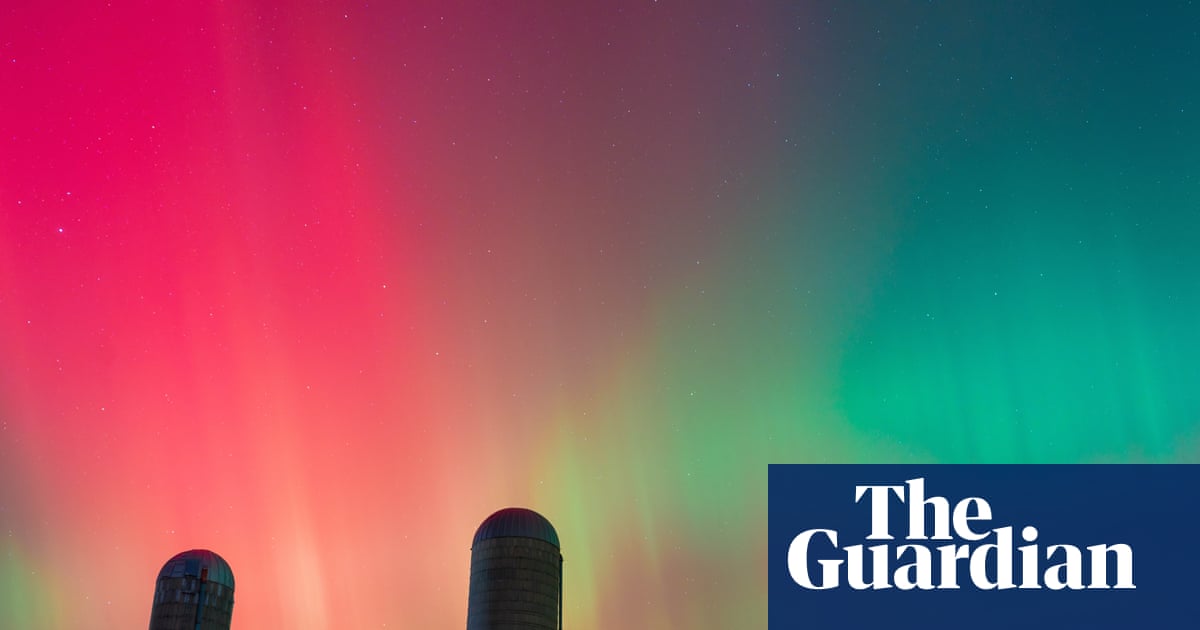
Northern lights visible across US as geomagnetic storm lights up skies
Overview
The National Oceanic and Atmospheric Administration issued a severe geomagnetic storm watch as coronal mass ejections from the sun caused G4-level storms.
These severe geomagnetic storms triggered vivid northern lights, making them visible across the United States, reaching as far south as Florida.
The Aurora Borealis was observed in numerous states, including Idaho, Iowa, Missouri, New York, Texas, and Florida, showcasing the widespread impact of the solar event.
While the initial G4-level storms have occurred, more potential displays of the northern lights are expected, though conditions may continue at a lower intensity.
Space weather forecasters warn that these geomagnetic storms may disrupt critical communication infrastructure, including radio, GPS, and power systems, posing ongoing concerns.
Analysis
Center-leaning sources cover the northern lights neutrally, focusing on factual explanations and widespread visibility. They use descriptive language to convey the aurora's beauty while providing scientific context about coronal mass ejections and geomagnetic storms, without sensationalizing potential minor disruptions.
FAQ
A G4-level geomagnetic storm is caused by coronal mass ejections (CMEs) from the sun, which, upon reaching Earth, disturb its magnetic field. This disturbance can lead to vivid auroras at lower latitudes and disrupt critical infrastructure such as power grids, satellite operations, GPS navigation, and high-frequency radio communications.
The northern lights were visible across many U.S. states including Idaho, Iowa, Missouri, New York, Texas, Florida, and Massachusetts, showing a rare southern reach of the aurora borealis triggered by the severe geomagnetic storm.
The geomagnetic storm can cause degradation and temporary loss of GPS signals, interruptions in high-frequency radio communications, and anomalies in satellite operations, especially affecting low-Earth-orbit satellites and navigation systems crucial during disaster relief.
More displays of northern lights and continued geomagnetic disturbances are possible, though likely at lower intensities. Infrastructure operators have been advised to monitor and mitigate impacts, such as increased stress on power grids and GPS outages. Users reliant on GPS and communication systems should prepare for intermittent disruptions.
Severe geomagnetic storms can degrade GPS accuracy or cause temporary signal loss, affecting precision farming tasks like planting and data collection. Farmers may need to pause fieldwork during the storm or accept reduced accuracy in operations until conditions improve.

