Lebanese President Joseph Aoun Condemns Israeli Attacks, Signals Readiness for De-escalation Talks
Lebanese President Joseph Aoun condemned Israel's escalating attacks but signaled willingness to negotiate for de-escalation, aiming for a diplomatic resolution.




Overview
Lebanese President Joseph Aoun publicly condemned Israel for its recent actions, characterizing them as escalating attacks against Lebanon.
President Aoun's statement highlights the growing tensions and concerns within Lebanon regarding the increased military activity from Israel.
Despite the strong condemnation, President Aoun also conveyed Lebanon's readiness to enter negotiations aimed at de-escalating the current conflict.
This diplomatic overture suggests a desire to find a peaceful resolution and prevent further escalation of hostilities in the region.
The Lebanese leadership is seeking a path to reduce tensions through dialogue, even while firmly denouncing perceived aggressions from Israel.
Analysis
Center-leaning sources cover this story neutrally by presenting a balanced account of the conflict between Israel and Hezbollah. They include perspectives from both Israeli and Lebanese officials, detail the justifications for actions from each side, and provide relevant historical context. The reporting avoids loaded language and ensures that casualty figures are presented comprehensively, reflecting impacts on both sides.
FAQ
President Joseph Aoun has condemned Israeli operations in southern Lebanon, including targeted assassinations, drone attacks, and ground incursions that have resulted in Lebanese military and civilian casualties[4]. Notably, in late October 2025, Israeli forces stormed a municipal hall in Blida, Marjayoun District, killing a Lebanese employee and prompting Aoun to order the Lebanese Armed Forces to repel further incursions[4].
While not specified in the latest statement, earlier in April 2025, Hezbollah—historically influential in Lebanese politics and security—stated a willingness to discuss disarmament only if Israel withdraws from five southern hilltop positions and halts its strikes; President Aoun, under pressure, has sought to bring all weapons under state control, but Hezbollah insists Israel must act first[4].
As of mid-2025, Israel has withdrawn from most of southern Lebanon but continues to occupy five positions and two “buffer zones” near the Blue Line, citing security concerns about Hezbollah’s potential return south of the Litani River[7]. UNIFIL reports ongoing Israeli military presence and recent aggressive postures, including direct fire incidents near UN positions[7].
UNIFIL is actively monitoring the cessation of hostilities, working to strengthen its operational posture, supporting local communities, and assisting the Lebanese Armed Forces in redeploying throughout the south[7]. The mission has also reported discovering weapons caches and incidents of aggressive behavior by both Israeli forces and local groups since the ceasefire[7].
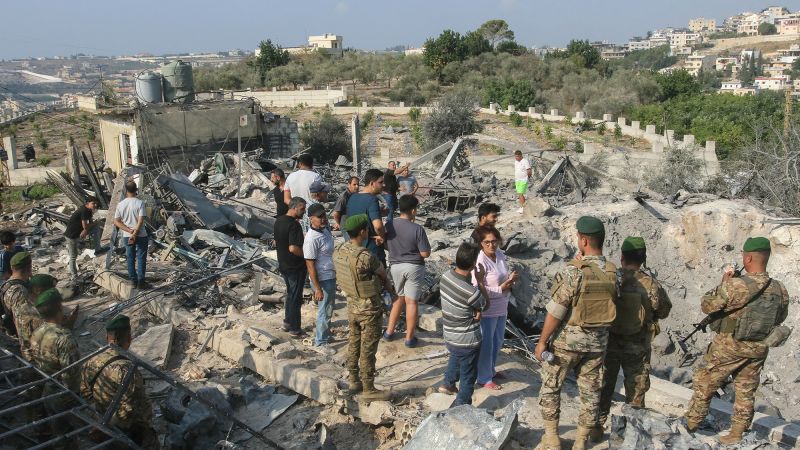
Recent Israeli operations have led to civilian casualties, displacement, and property destruction in southern Lebanese towns and villages[5]. The destruction of Kfar Kila extended into early 2025, with Israeli forces restricting civilian return to certain areas and incidents of gunfire injuring civilians attempting to return home[5].