Trump Administration Considers Military Action Against Venezuela
Trump's administration frames military operations against Venezuela as a war on drug trafficking and terrorism, declaring Maduro's regime a foreign terrorist organization.



Overview
Trump's administration has framed potential military operations against Venezuela as a necessary response to drug trafficking and terrorism concerns.
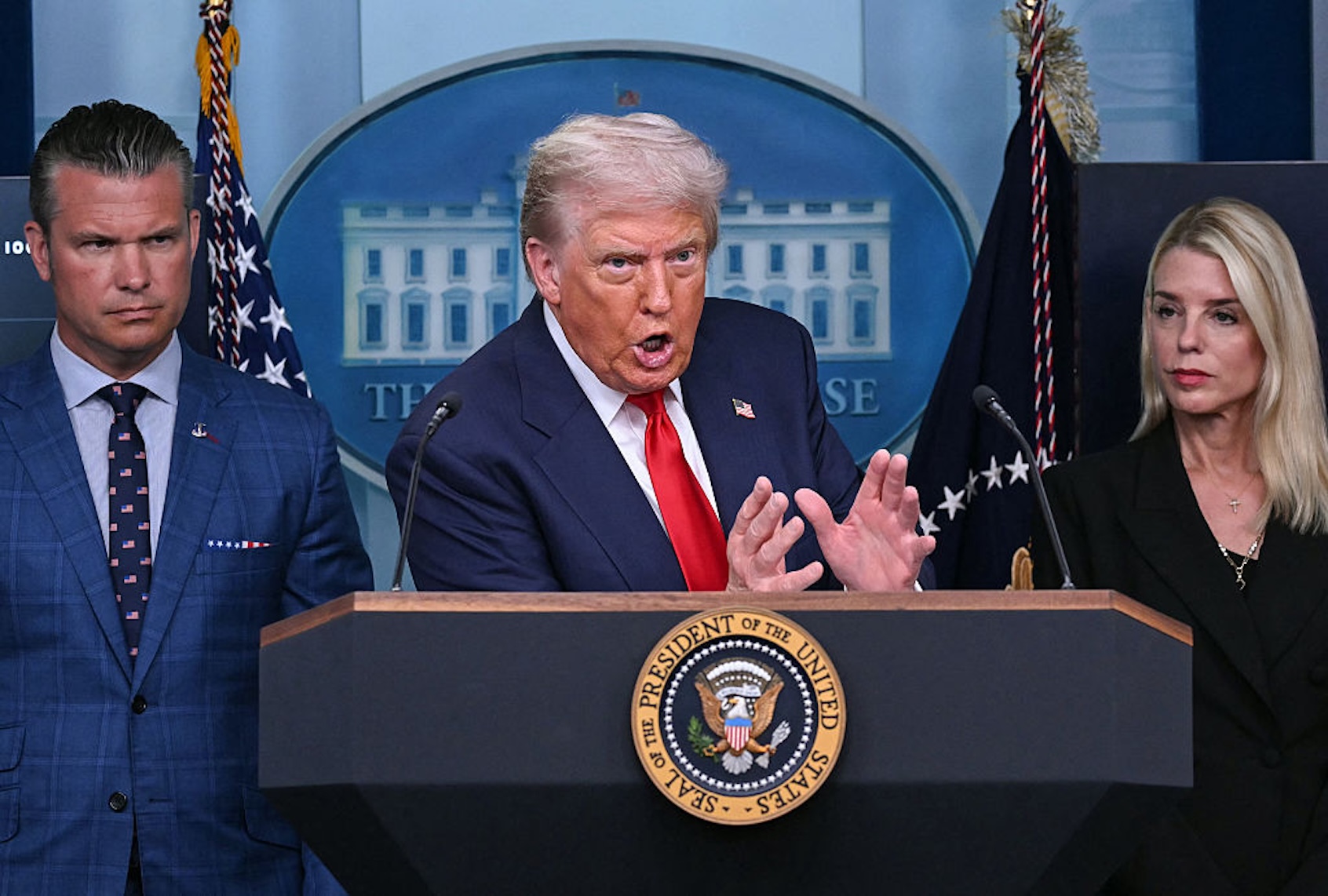
President Trump explicitly declared Nicolás Maduro's regime in Venezuela a foreign terrorist organization, escalating rhetoric against the South American nation.
This declaration by President Trump opens the door for various actions, including potential military intervention, against the Venezuelan government.
President Trump has consistently maintained that the option of war with Venezuela remains on the table, indicating a firm stance against Maduro's leadership.
The administration's strategy aims to pressure Maduro's regime, citing its alleged involvement in illicit activities and its designation as a terrorist entity.
Analysis
Center-leaning sources provide a neutral account of President Trump's statements and actions regarding Venezuela. They focus on reporting factual developments without injecting evaluative language or selective emphasis. The coverage details military actions, Trump's declarations, and the consequences, presenting information directly and allowing readers to form their own conclusions.
FAQ
The administration would likely rely on the president's powers to use military force without prior congressional authorization—citing national security, counter-narcotics operations, or the designation of Maduro's regime as a foreign terrorist organization—while Congress has attempted (and narrowly failed) to pass War Powers resolutions to restrict such action, leaving legal authority contested and politically disputed.
Yes; in December 2025 the House narrowly defeated measures—including a bipartisan War Powers resolution sponsored by Rep. Jim McGovern—that would have prohibited or required congressional authorization for military action 'within or against' Venezuela, and similar Senate measures also failed, leaving no new statutory restriction in place.
The U.S. has surged military assets to the Caribbean in 2025, including a large naval presence and an aircraft carrier strike group, with repeated flights near Venezuelan territory; officials say deployments were framed as counter-narcotics efforts, though analysts judged them insufficient for an invasion.
Regional governments and Venezuela's Maduro administration have condemned U.S. threats; Caracas mobilized militia forces and called for 'maximum preparedness,' while critics in Congress and international observers warned that U.S. escalation risks open-ended conflict and destabilization in Latin America.[1]
The administration has framed operations as aimed at combating drug trafficking and terrorism and has designated Maduro's regime a foreign terrorist organization to justify pressure options—including strikes, blockades of oil tankers, and targeting drug cartels—while officials have described various measures short of a full invasion.